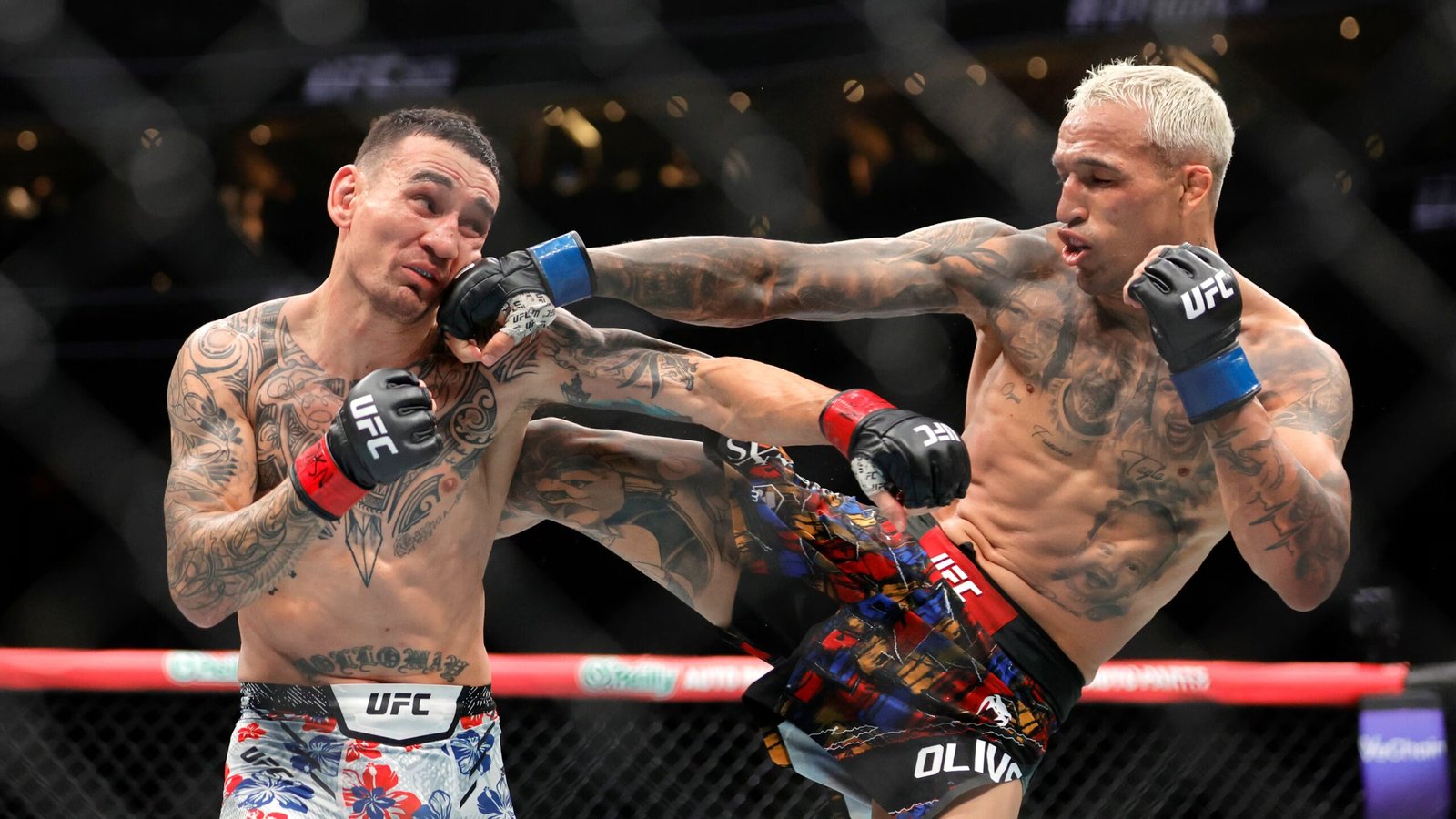


Andrew Tate stepping into a boxing ring was always going to divide opinion. A multiple-time kickboxing world champion with years of striking experience, Tate clearly believes fighting ability is transferable across rule sets. But his bout against Chase DeMoor showed why that assumption can be dangerous. Boxing is not kickboxing with fewer weapons, and against DeMoor, Tate often looked like a fighter operating with the wrong instincts.
From the opening rounds, Tate appeared uncomfortable with boxing’s demands. His stance remained too upright and bladed, a structure that works in kickboxing where kicks control distance, but becomes a liability in boxing. Without the threat of leg or body kicks, his movement lacked purpose, and his jab did not consistently set up combinations. Instead, he relied on single shots and pauses, giving DeMoor time to reset and apply pressure.
Defensively, the differences were even clearer. Tate frequently leaned back to avoid punches, a habit common in kickboxing but heavily punished in boxing. With his head often on the centre line and limited lateral movement, he struggled to stay defensively responsible during exchanges. DeMoor, while not an elite boxer, was able to force Tate into uncomfortable moments simply by closing distance and keeping the fight in boxing range.
As the fight wore on, Tate’s pacing also became an issue. Boxing requires sustained output and constant engagement to win rounds clearly. Tate’s rhythm felt off, as if he was waiting for openings that would normally be created by kicks. Without those tools, his offence stalled, and he began to look out of place in prolonged exchanges.

SHOP: Kickboxing Equipment
A major talking point after the fight was Tate’s corner, led by Amir Subasic. Subasic has been Tate’s long-time coach and is widely respected in kickboxing circles. He played a key role in shaping Tate’s career as a world champion kickboxer and understands his strengths better than almost anyone.
However, the fight against Chase DeMoor raised a fair question about whether that experience translated effectively to boxing preparation. Subasic’s background is rooted in kickboxing, not high-level professional boxing. While the two sports share similarities, their technical priorities are very different. Boxing places far greater emphasis on head movement, compact defence, combination punching and ring positioning, areas where Tate visibly struggled.
This is not a criticism of Subasic’s overall ability as a coach, but rather a question of specialisation. Tate’s performance suggested he may have benefited from working alongside a dedicated boxing coach who could focus solely on adapting his habits to boxing’s unique demands. Instead, many of his kickboxing instincts remained intact, and those instincts worked against him under boxing rules.
In the end, Tate’s fight with DeMoor did not expose a lack of toughness or confidence. It exposed a lack of stylistic compatibility. Andrew Tate remains a proven kickboxer, but his boxing debut showed that success in one striking discipline does not guarantee success in another. Against Chase DeMoor, the gap between kickboxing excellence and boxing proficiency was clear, and it left Tate looking like a fighter competing in a sport that simply did not suit his style.
READ MORE: Jake Paul vs Anthony Joshua: Was It Rigged?