

When Andrew Tate was competing as a professional kickboxer, he fought with a style that made the “Cobra” nickname feel natural. In those prime years, often seen sporting Sidekick Boxing gloves, Tate didn’t rely on throwing a storm of punches. Instead, he chose his moments. What he threw mattered, and what landed usually had consequences. His head movement was unusual compared to a typical kickboxer, almost awkward at times, but it worked because opponents struggled to predict where he would be.
That era showcased a fighter who valued precision over pressure. Tate’s striking was clean, tight, and delivered with the confidence of someone who understood timing better than most. Those performances built the reputation that still follows him today.

Today, years after those kickboxing days, Tate is preparing to step into a boxing ring against Chase DeMoor. This matchup brings back the debate of what version of Tate we will see. Fans wonder whether he can bring elements of his old style into a modern boxing environment, where timing, distance, and conditioning become even more demanding without the tools of kickboxing.
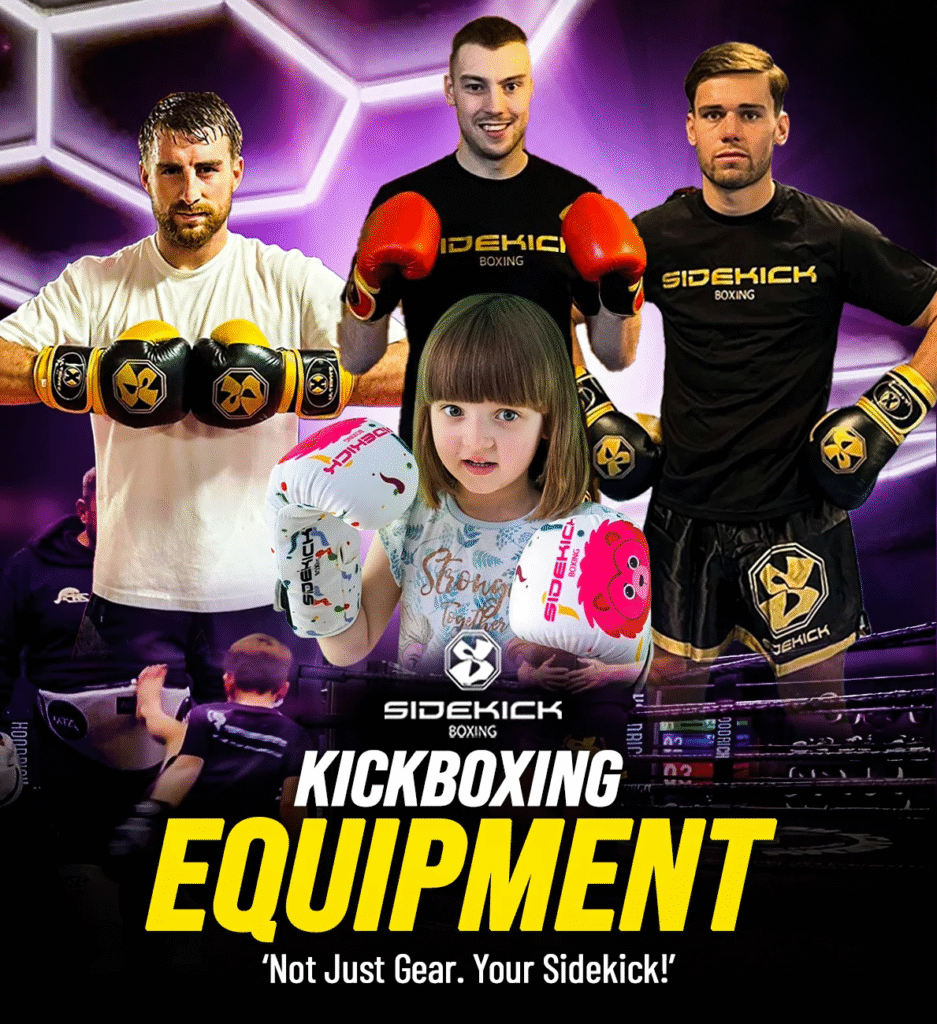
SHOP HERE : Kickboxing Equipment
DeMoor enters the fight with size, youth, and recent activity on his side, creating a contrast against Tate’s experience, ring IQ, and history of sharp counter-striking. Tate’s supporters hope that the same calm, calculated approach he once displayed will translate once again. His ability to remain patient, draw mistakes, and land meaningful shots could be key against a larger opponent who thrives on pressure.
Andrew Tate is now 39, and although he appears to be in remarkable physical shape, there are natural concerns that come with age and time away from competition. Ring rust is a very real factor for any fighter who has spent years outside the professional environment. Timing, reaction speed, rhythm, and fluidity are often the first things to fade, even if the body still looks strong. Tate also moves a little more flat-footed than he once did, which could become a problem against an opponent who applies pressure or forces him to reset frequently.
Another question is how much of his old style can realistically carry over. In his kickboxing prime, Tate flowed between weapons. He could disguise punches behind low kicks, mix his rhythm with teeps and step-inside hooks, or disrupt an opponent’s balance before landing something clean. His striking worked so well because it was built on variety and unpredictability. Without kicks, that dynamic changes.
Now, under boxing rules, Tate must rely solely on his hands. The fluidity he once had came from blending techniques, using kicks to create openings, and keeping opponents guessing. Pure boxing demands tighter footwork, more consistent head movement, and sharper punch volume. The question becomes whether Tate can recreate that smooth, free-flowing timing without the tools that once made his style unique.
READ MORE: Teofimo Lopez vs Shakur Stevenson fight announcement shakes the boxing world