Boxing stands today as one of the most watched combat sports in the world, producing legendary champions, record breaking events, and massive paydays. Mega fights involving stars like Floyd Mayweather Jr. and Manny Pacquiao helped push the sport into a global entertainment phenomenon worth hundreds of millions of dollars. Yet despite its modern glamour, the roots of boxing stretch back thousands of years to a far more violent and unforgiving era.
The boxing glove itself has gone through one of the biggest transformations in combat sports history. What started as primitive hand coverings designed to increase damage eventually evolved into protective equipment focused on safety, technique, and regulation. The journey from ancient leather straps to modern padded gloves reveals just how much the sport has changed over time.

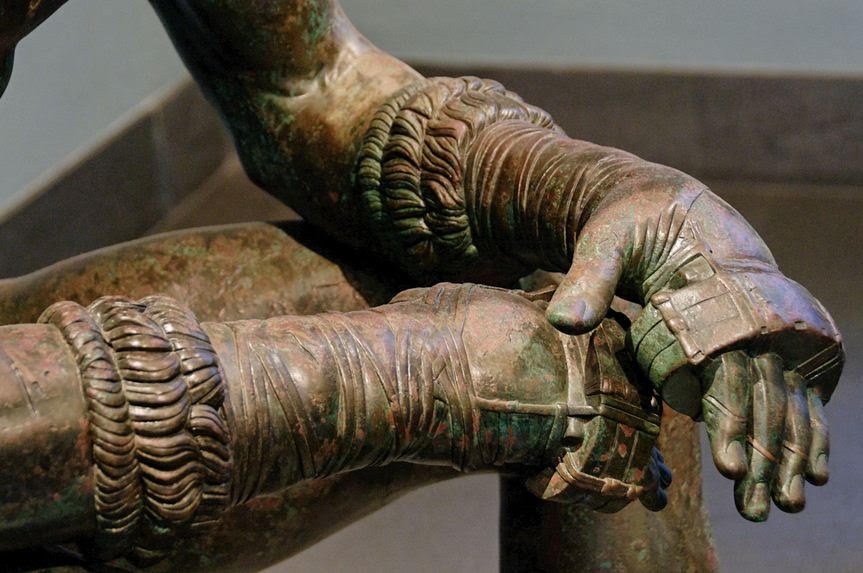
The earliest evidence of combat gloves dates back to ancient Greece. Around 650 BC, Homer’s Iliad referenced fighters wearing leather hand wraps known as “himantes.” These strips of oxhide were wrapped tightly around the hands and knuckles, giving fighters minimal protection while making punches more effective. Unlike modern gloves, they were never intended to reduce injuries.
As combat sports developed in Greek and Roman societies, the hand coverings became increasingly dangerous. Roman fighters used a glove called the “cestus,” which often included metal plates, spikes, and reinforced studs. Some versions even extended toward the forearm and elbow for defensive purposes. These contests were incredibly brutal, with many fights ending after a single devastating blow.
The violent nature of these early gloves reflected the culture of combat during the time. Boxing was less about athletic competition and more about survival, toughness, and spectacle.
Very little is known about boxing during the Middle Ages due to the lack of recorded history from that period. Many historians believe combat sports became overshadowed by weapon based warfare and knightly tournaments. Still, it is unlikely that boxing disappeared entirely.
While Europe entered a quieter period for fist fighting, striking arts continued evolving in Asia. Ancient Muay Thai, known as Muay Boran, featured fighters wrapping their hands with thick hemp rope for support and protection. These wraps were far simpler than modern boxing gloves but still played an important role in combat. Stories about rope being coated in glass have circulated for years, although most historians consider those tales exaggerated.
Even without detailed historical records, boxing and hand to hand combat continued developing across different cultures.

SHOP: Kickboxing Equipment
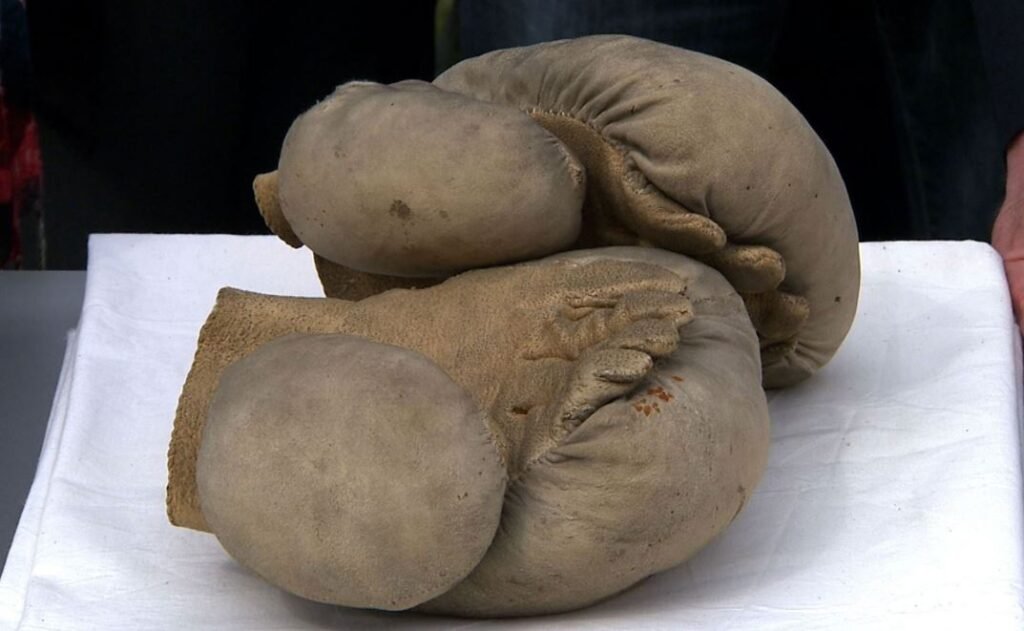
A major turning point came in 1743 when English boxer Jack Broughton introduced padded gloves called “mufflers.” Filled with materials such as horsehair or lambswool, these gloves were designed to soften punches rather than increase damage. At first, they were mainly used during training and sparring sessions.
The real shift toward modern boxing came with the introduction of the Marquess of Queensberry Rules in 1865. These rules eventually made gloves mandatory in professional bouts and helped transform boxing into a more organized and regulated sport. Their widespread acceptance during major heavyweight fights helped establish glove use as a permanent part of professional boxing.
Over time, gloves became larger, safer, and more protective. Modern professional boxing gloves now typically weigh at least 8 oz, while sparring gloves often reach 16 oz to better protect fighters during training.
Interestingly, MMA gloves resemble ancient combat gloves more closely than traditional boxing gloves. Usually weighing between 4 and 6 oz, they leave the fingers exposed to allow grappling while still offering some hand protection.
From crude leather wraps in ancient civilizations to the carefully engineered gloves used today, boxing equipment has evolved alongside the sport itself. The transformation reflects not only advances in safety and technology, but also the journey of boxing from a brutal contest of survival to a globally respected sport.